ACCIBERG invite you to the second stakeholder workshop, taking place both online and in person at DMI, Copenhagen, Denmark from 9:00 - 14:00 on 12th June 2026.
The objective of the workshop is to review the new services from the ACCIBERG project, namely ensemble sea ice forecasts and iceberg trajectory forecasts, to provide feedback and plan the future integration of these services into operational Copernicus Services in the Arctic. For those keen to see results before June, demonstrations of the services can now be found on EDITO for both ICECAP and OpenBerg.
To register for the meeting (both in person and online) please fill out the registration form by 20th March 2026 (for in person, the 10th June for online). We will record the meeting and make the recordings available online for those who are unable to attend, including our US and Canadian friends who want to avoid waking up too early.
Agenda
| 09:00 - 09:10 | Welcome: Till Soya Rasmussen (DMI) |
| 09:10 - 09:30 | Introduction to the ACCIBERG Project: Laurent Bertino (NERSC) |
| 09:30 - 10:00 | The Greenland Ice Service and how ACCIBERG is supporting evolving user needs: Keld Qvistgård (DMI) |
| 10:00 - 10:35 | Demonstration of the main features of ICECAP and OpenBerg on EDITO: Renaud Dussurget and Cruz Garcia (Mercator Ocean Int.) Introduction of MetNo's Interactive sea-ice forecast visualisation, Thomas Lavergne (MetNo) |
| 10:35-11:00 | Break |
| 11:00-12:00 | Hands-on session using OpenBerg and ICECAP on EDITO |
| 12:00-12:30 | Upcoming features of EDITO and next steps: Renaud Dussurget (Mercator Ocean Int.) |
| 12:30-13:30 | Lunch |
| 13:30 - 14:00 | Wrap up session and feedback gathering: Laurent Bertino (NERSC) and Renaud Dussurget (Mercator Ocean Int.) |
Logistics
Online Participants
Please make sure to add the date to your calendar. You will be sent a link to the Teams meeting once you have registered.
During the Hands-on session there will be representatives from the ACCIBERG project and OpenDrift available online to help answer any questions.
On site Participants
Getting to DMI:
Address: DMI, Sankt Kjelds Pl. 11, 2100 København, Denmark
DMI – Google Maps
Entry through the reception with front towards Skt Kjelds Plads (roundabout).
It is recommended to stay in the city Center as the area around DMI is less interesting.
How to reach DMI:
Bus: From nørreport station bus lines 150s, 15e, 184 and 185 stops at Haraldsgade (Lyngbyvej)
Metro: line (M3) stops at “Vibenshus Runddel”.
S – train to Ryparken Station (line B)
Use rejseplanen www.rejseplanen.dk
Remember to buy a ticket before you enter the bus or train.
Before the workshop
As the project is entering its final six months, we are keen to share the developments we’ve made for the sea ice and iceberg forecasting services. The workshop will demonstrate the progress the ACCIBERG project has made on the sea ice and iceberg forecasting services, on the EDITO platform.
We recommend as a prerequisite to register (for free) and ask for resources on EDITO https://datalab.dive.edito.eu/. Connect with Help Center for Support.
Sea Ice: ICECAP (sea-Ice Calibration, vErifiCAtion and Products) is specifically designed to provide end-user forecast products based on sea ice forecasts from days to seasons ahead from multiple forecast centres, alongside information on the quality and uncertainty of those forecasts. The software is intended for two main user types, scientific and end-user, with two different user interfaces. The scientific-user interface can run ICECAP on a Linux system using a workflow manager (e.g. ecFlow), which enables the user to use all implemented capabilities. The end-user interface is more user-friendly and can be used via jupyter notebooks, however providing simpler capabilities. The software can be found at https://github.com/ecmwf/ICECAP and for those wanting to get a headstart to the workshop, you can view the demonstrations of ICECAP on EDITO.
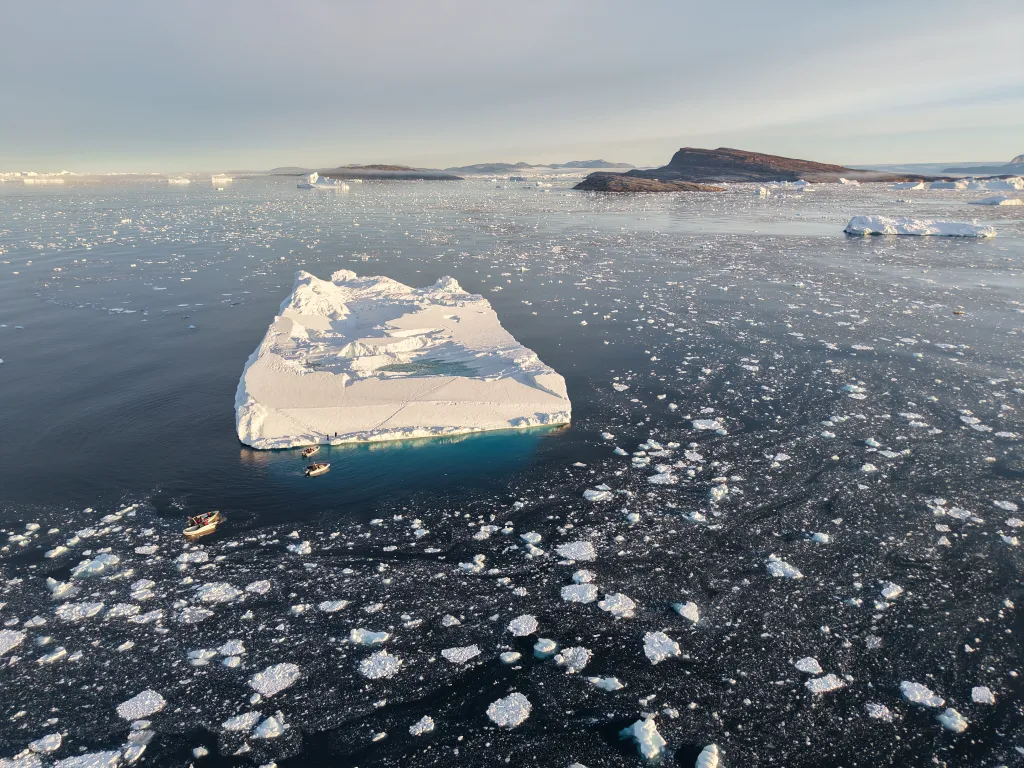
Icebergs: OpenBerg aims to simulate the drift and fate of icebergs in the Arctic. It can be used for calculation of individual iceberg drift trajectories and risk maps and is intended for anyone interested in tracking icebergs. The open-source package is available on EDITO with tutorials for you to test before the workshop, but can also be found online on Github if you prefer a local installation. It also comes with a built-in graphical user interface (GUI) that can be used without knowledge of programming.